534 2nd Street Pike, Southampton, PA 18966

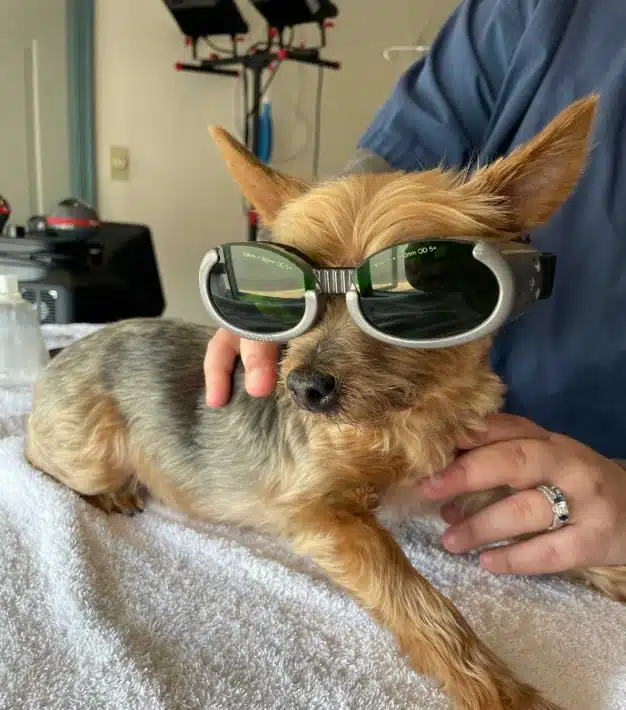

Supporting Your Dog’s Comfort and Recovery With Laser Therapy
Pain, inflammation, and limited mobility can affect everything from your dog’s morning walk to their ability to climb stairs or comfortably get up from the floor. Depending on the cause, medication may not be the only option available to support their recovery.
At Family Pet Clinic, we offer dog laser therapy as a non-invasive treatment that may be incorporated into a broader pain management or recovery plan. Laser therapy uses targeted light energy to stimulate biological processes involved in circulation and tissue repair while helping reduce inflammation and discomfort.
Depending on your dog’s condition, laser therapy may be used on its own or alongside medications, joint support, rehabilitation, and other veterinary treatments.
How Does Laser Therapy for Dogs Work?
During laser therapy for dogs, a handheld treatment device delivers specific wavelengths of light to the targeted area. The light energy penetrates the tissues and is absorbed at the cellular level, where it can support cellular activity, local circulation, and the body’s natural healing response.
Because treatment is non-invasive, there are no incisions or injections involved in the therapy itself. Most dogs remain awake throughout their appointment and do not require sedation.
Many dogs experience a gentle warming sensation over the treatment area and remain relaxed while therapy is performed. This makes laser therapy particularly useful when repeated sessions are recommended.
When May Dog Laser Therapy Be Recommended?
Laser therapy can be useful for both chronic conditions and short-term injuries. Before recommending treatment, our veterinarians evaluate your dog to determine the source of their discomfort and whether laser therapy is appropriate for their condition.
It may be considered for dogs experiencing:
- Arthritis and joint discomfort
- Muscle strains and sprains
- Soft tissue injuries
- Certain skin wounds and hot spots
- Inflammation associated with some ear conditions
- Post-operative discomfort
- Surgical incision healing
- Reduced mobility related to musculoskeletal discomfort
Laser therapy is not intended to replace every other form of treatment. Instead, it can be incorporated into a multimodal treatment plan based on your dog’s diagnosis and individual needs.
Laser Therapy for Dogs With Arthritis and Joint Discomfort
Arthritis is common in senior dogs, although joint problems can affect dogs at other stages of life as well. You may first notice subtle changes, such as taking longer to stand, hesitating before using stairs, walking more slowly, or losing interest in activities your dog previously enjoyed.
For appropriate patients, laser therapy may help decrease inflammation and discomfort around affected joints, making everyday movement more comfortable.
Dogs with chronic joint conditions may receive laser therapy alongside other forms of management, such as veterinarian-prescribed medications, weight management, controlled activity, rehabilitation, or joint-support strategies.
Because arthritis is a long-term condition, some dogs may benefit from an initial series of treatments followed by periodic maintenance sessions.
Supporting Recovery After Injury or Surgery
Healing after an injury or surgical procedure takes time. During recovery, inflammation and discomfort can make normal movement more difficult and may affect your dog’s willingness to use the affected area.
Laser therapy may be incorporated into recovery plans for certain orthopedic procedures, soft tissue surgeries, strains, sprains, and other injuries. Treatment is directed toward the affected tissues to help manage inflammation and support the healing process.
When laser therapy is recommended after surgery, our veterinary team will determine when treatment should begin and how frequently sessions should be performed based on the procedure and your dog’s recovery.
What to Expect During Your Dog’s Laser Therapy Session
Laser therapy appointments are generally straightforward and require little preparation from pet owners. Your dog is positioned comfortably while a handheld laser device is moved over or directed toward the area being treated.
A typical session may take approximately 5 to 15 minutes, although treatment time varies depending on the condition and the size and number of areas being treated. Most dogs tolerate the process well. Treatment is quiet, non-invasive, and generally does not require sedation. Some dogs may simply sit or lie down while the therapy is performed.
Once the session is complete, your dog can typically return home without a special recovery period from the laser treatment itself.
Explore Another Option for Your Dog’s Comfort
If your dog has started slowing down, seems uncomfortable during everyday movement, or is recovering from an injury or procedure, identifying the reason for those changes comes first. Our veterinarians can evaluate your dog and determine whether dog laser therapy could play a useful role in their treatment or recovery plan.
Contact Family Pet Clinic to discuss laser therapy for your dog and the next steps for supporting their comfort and mobility.