534 2nd Street Pike, Southampton, PA 18966


Finding Answers When Your Cat Shows Subtle Changes
Cats often conceal signs of illness until a condition has progressed. Instead of obvious symptoms, you may notice small changes such as sleeping more, eating less, losing weight, drinking more water, or using the litter box differently.
A physical examination is an important starting point, but it cannot always reveal what is happening internally. At Family Pet Clinic, cat diagnostic care allows us to gather additional information when examination findings, symptoms, or routine screening indicate that a closer look is needed.
Our diagnostic capabilities include an in-house laboratory and digital radiography. By combining test results with your cat’s medical history, physical examination, and the changes you have observed at home, our veterinarians can develop appropriate next steps.
In-House Laboratory Testing for Cats
Access to an in-house laboratory allows our veterinary team to perform many commonly needed tests without sending every sample to an outside facility. This can be especially valuable when a cat is sick and timely information is needed to guide medical decisions.
Laboratory testing may be recommended to investigate a specific symptom, establish baseline health information, monitor an existing condition, or evaluate changes that develop as your cat ages.
Depending on your cat’s needs, testing may include:
- Complete Blood Count (CBC): Measures red blood cells, white blood cells, and platelets and can provide information related to anemia, inflammation, infection, and other abnormalities.
- Blood Chemistry Panel: Evaluates several markers related to internal organ function, including the kidneys and liver.
- Urinalysis: Examines urine concentration and other characteristics that can provide information about urinary and systemic health.
- Thyroid Testing: Measures thyroid hormone levels and can be particularly useful when evaluating certain changes in middle-aged and senior cats.
- Electrolyte Testing: Measures important minerals involved in hydration and normal body functions.
- Fecal Testing: Screens for intestinal parasites and can provide additional information when a cat has certain gastrointestinal concerns.
- Skin Testing: Skin samples or scrapings may be examined when investigating hair loss, itching, irritation, or other dermatological problems.
Not every cat requires every test. Our veterinarians select diagnostics based on the specific information needed for your cat.
Why Bloodwork Can Be Important for Cats
Cats can have significant internal changes without displaying dramatic symptoms. Blood testing gives our veterinarians information that cannot be obtained simply by looking at or feeling your cat during an examination.
For example, bloodwork may be considered when a cat develops:
- Unexplained weight loss
- Changes in appetite
- Increased thirst or urination
- Vomiting or diarrhea
- Reduced energy
- Changes in behavior
- Weakness
- Changes associated with aging
Bloodwork may also be recommended as part of routine health screening or before certain procedures.
Digital X-Rays for Cats
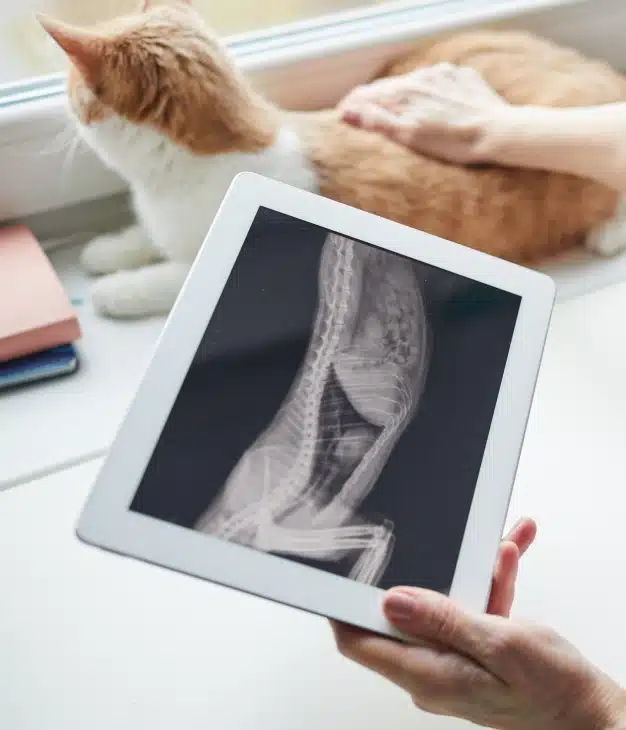
Sometimes the information we need cannot be obtained from a blood or urine sample. Digital radiography allows us to examine structures inside your cat’s body without surgery.
X-rays may provide useful information about the chest, abdomen, bones, joints, and spine. Depending on your cat’s symptoms, radiographs may help our veterinarians investigate concerns involving:
- Bone fractures
- Arthritis and joint changes
- Bladder stones
- Changes in organ size or position
- Certain masses
- Lung abnormalities
- Spinal conditions
- Swallowed objects
- Gastrointestinal obstruction
Digital images can be reviewed promptly, helping our veterinarians determine whether additional testing or treatment is necessary.
Evaluating Skin and Coat Problems in Cats
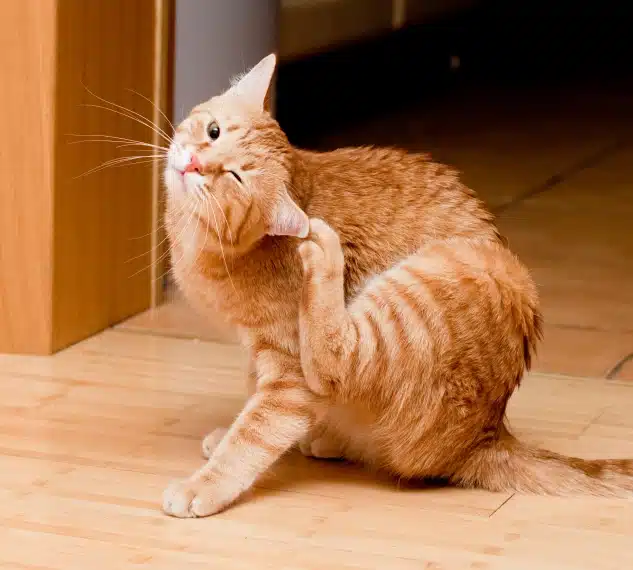
Excessive grooming is not always simply a behavioral habit. Cats may repeatedly lick or bite areas that are itchy, irritated, uncomfortable, or painful.
A dermatological evaluation may be appropriate if you notice:
- Persistent scratching
- Excessive licking or grooming
- Bald or thinning areas
- Red or flaky skin
- Scabs or sores
- Unusual shedding
- Lumps or bumps
- Recurrent skin irritation
Possible causes can include parasites, infections, allergies, and other medical conditions.
Depending on what we find during the examination, diagnostic care may include skin sampling, laboratory testing, or other tests. Treatment recommendations are then based on the suspected or confirmed cause rather than the outward symptom alone.
Get a Clearer Picture of Your Cat’s Health
A change in appetite, weight, grooming, behavior, or litter box habits may be your cat’s only way of showing that something is wrong. Rather than treating those changes in isolation, diagnostic testing can help us investigate what may be causing them.
Family Pet Clinic provides diagnostic care for cats in Southampton using examination findings, in-house testing, and digital imaging to guide appropriate next steps.