534 2nd Street Pike, Southampton, PA 18966

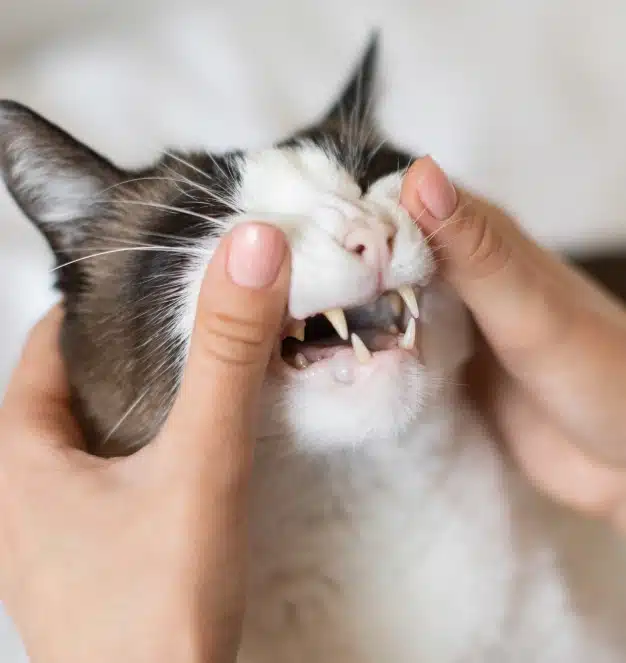

Protecting Your Cat’s Oral Health at Every Life Stage
Cats rarely make dental discomfort obvious. Even with a painful tooth or inflamed gums, many continue eating and behaving normally. Instead of refusing food altogether, a cat may chew differently, prefer softer foods, groom less often, or simply become quieter.
At Family Pet Clinic, cat dental care focuses on identifying these subtle problems before they have a greater impact on your cat’s comfort. We assess the teeth and gums during routine examinations and may recommend a more detailed dental evaluation when we find tartar, inflammation, damaged teeth, or other abnormalities.
Professional dental care for cats may include dental X-rays, cleaning above and below the gumline, and treatment of diseased teeth when necessary.
Signs Your Cat May Have a Dental Problem
Because feline dental disease can progress without dramatic symptoms, changes around eating and grooming deserve attention.
Possible signs include:
- Persistent bad breath
- Red, swollen, or bleeding gums
- Visible tartar on the teeth
- Drooling
- Pawing at the mouth
- Chewing on one side
- Dropping food while eating
- Preferring wet or softer foods
- Reduced appetite
- Difficulty grooming
- Facial swelling
- Becoming sensitive around the face or mouth
Cats with dental pain do not always stop eating. Continuing to eat should not be taken as proof that your cat’s mouth is comfortable.
Dental Examinations for Cats
Your cat’s routine physical examination includes an assessment of their mouth whenever they allow us to examine it safely and comfortably.
We look for visible changes involving the teeth, gums, and surrounding tissues. Findings such as gingivitis, tartar accumulation, fractured teeth, loose teeth, or suspected tooth resorption may indicate that a more complete dental assessment is needed.
However, an awake oral examination has limitations. Cats may not tolerate prolonged examination of the mouth, and much of each tooth lies beneath the gumline. For this reason, a complete evaluation during an anesthetized dental procedure can reveal problems that are not apparent during a routine visit.
Professional Dental Cleanings for Cats
Once plaque and tartar have accumulated, brushing alone cannot remove deposits that have hardened onto the teeth or developed beneath the gumline.
A professional feline dental cleaning allows our team to thoroughly examine and clean your cat’s mouth. The procedure generally involves removing plaque and tartar from the visible surfaces of the teeth as well as below the gumline, where periodontal disease develops. After scaling, the teeth are polished to create a smoother surface.
Professional cat dental services are performed under general anesthesia. This is important for both the quality of the dental procedure and your cat’s safety and comfort. Before the procedure, your veterinarian evaluates your cat and may recommend pre-anesthetic testing based on their age, medical history, and current health.

Dental X-Rays Reveal What We Cannot See
A tooth is much more than the portion visible above the gumline. The roots and surrounding bone cannot be adequately evaluated by looking inside your cat’s mouth alone.
Dental radiographs can provide important information about structures beneath the gums and may help identify:
- Tooth root abnormalities
- Bone loss
- Tooth resorption
- Retained root fragments
- Fractured teeth or roots
- Other abnormalities below the gumline
X-rays can be particularly valuable in cats because some painful feline dental conditions develop primarily beneath the visible surface of a tooth.
When Does a Cat Need a Tooth Extraction?
Preserving healthy teeth is always preferable, but keeping a severely diseased or painful tooth does not benefit your cat.
Extraction may be recommended when a tooth is affected by significant periodontal disease, resorption, fracture, infection, or another condition that makes the tooth painful or unlikely to remain functional.
Cats generally adapt very well after diseased teeth are removed. Eliminating a source of chronic oral discomfort can make eating and everyday activities more comfortable. Our veterinarian will discuss relevant dental findings and recommended treatment with you.
At-Home Dental Care for Cats
Home care can help slow plaque accumulation between professional evaluations. Tooth brushing is one of the most effective options when a cat accepts it.
Introduce brushing gradually rather than immediately attempting to brush the entire mouth. Allow your cat to become comfortable with having their lips and face touched before introducing a feline toothbrush or other veterinarian-recommended method.
Always use toothpaste formulated specifically for pets. Human toothpaste should not be used for cats.
For cats that do not tolerate brushing, ask our veterinary team about other dental care options that may be appropriate. Home dental products should supplement regular veterinary assessments rather than replace them.
Make Dental Health Part of Your Cat’s Routine Care
Your cat’s mouth deserves the same attention as the rest of their health. Regular dental evaluations can uncover problems that are difficult to see at home and provide an opportunity to address them before they progress.
Family Pet Clinic provides comprehensive dental care for cats in Southampton, PA. Schedule your cat’s dental visit to have their teeth and gums evaluated and discuss any recommended next steps.