278 Easton Rd, Horsham, PA 19044, United States



Comprehensive Puppy Wellness Care in Horsham, PA
Welcoming a puppy into your family is an exciting experience, but the first few months also come with important health decisions. Establishing routine veterinary care early can help your puppy get the vaccinations, parasite prevention, nutrition guidance, and monitoring they need as they grow.
At Family Pet Clinic in Horsham, PA, we provide comprehensive puppy care designed to support your puppy's health from their first veterinary visit through the transition into adulthood. Our veterinary team will evaluate your puppy's health, discuss their lifestyle and needs, and help you understand the care they need at each stage of development.
Start Your Puppy's Life With the Right Veterinary Care
Your puppy's early veterinary visits are about more than vaccinations. They allow our veterinary team to assess your puppy's overall health and establish a baseline for future visits.
During these appointments, we can discuss your puppy's:
- Growth and development
- Vaccination needs
- Parasite prevention
- Nutrition
- Weight
- Behavior and socialization
- Spay or neuter timing
- Identification and microchipping
Scheduling your puppy's first wellness examination soon after adoption allows potential health concerns to be identified early and allows you to ask questions about caring for your new companion.
What to Bring to Your Puppy's First Visit
If possible, bring any medical records provided by the breeder, shelter, or previous veterinary practice. Information about previous vaccinations, deworming, medications, and health concerns can help our veterinary team create an appropriate care plan.
It can also be helpful to bring a list of questions about feeding, behavior, house training, exercise, and other aspects of raising your puppy.
Puppy Wellness Exams for Healthy Growth
Puppies go through rapid physical development during their first months of life. Regular wellness examinations allow your veterinarian to monitor this progress and identify changes that may require attention.
During a puppy examination, our veterinary team evaluates your puppy's overall health and discusses their development with you. We also review vaccination and parasite prevention needs based on your puppy's age, health, and lifestyle.
Vaccinations to Protect Your Puppy
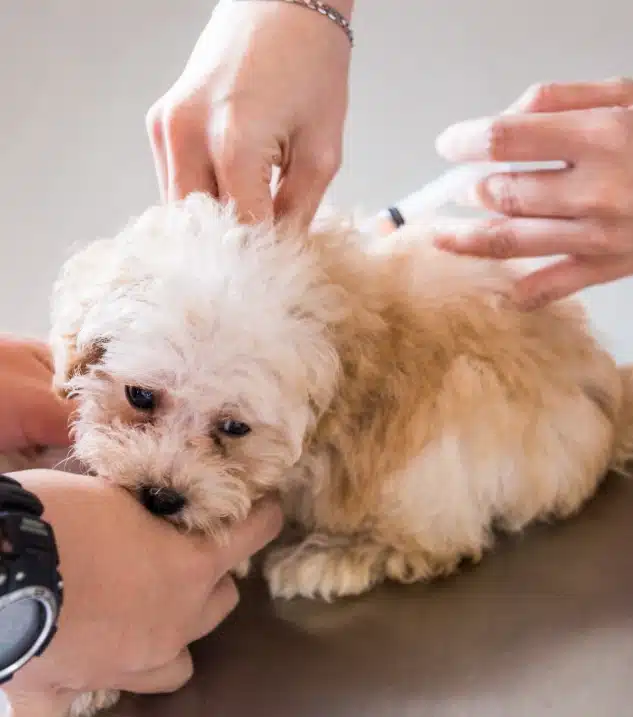
Vaccinations are an important part of early puppy care. Puppies receive vaccines at specific stages because maternal antibodies can affect how effectively a young puppy responds to vaccination.
Your veterinarian will recommend an appropriate vaccination schedule based on your puppy's age, health, previous vaccine history, and risk of exposure.
Core and Lifestyle-Based Vaccines
Core vaccines are recommended because they protect against serious diseases that can affect dogs. Your puppy's vaccination plan may include protection against diseases such as distemper, parvovirus, and rabies when age-appropriate.
Additional vaccines may be recommended depending on your puppy's lifestyle and exposure risks. For example, puppies that will attend boarding facilities, daycare, dog parks, or other group settings may have different vaccination needs than puppies with limited exposure to other dogs.
Our veterinary team will explain which vaccines are appropriate for your puppy and when they should be administered.
Protect Your Puppy From Parasites
Puppies are particularly susceptible to intestinal parasites. Some parasites can cause digestive problems and other health concerns, while certain parasites can also affect people. Routine parasite testing and prevention are important parts of your puppy's wellness care.
Fecal Testing and Parasite Prevention
A fecal examination can help identify intestinal parasites that may not be obvious from your puppy's appearance or behavior. Your veterinarian may recommend testing during puppy wellness visits along with appropriate parasite prevention.
Common intestinal parasites that can affect puppies include:
- Roundworms
- Hookworms
- Whipworms
- Tapeworms
- Giardia
- Coccidia
Following your veterinarian's recommendations for parasite prevention and testing can help protect your puppy as they explore their environment.
Microchipping for Permanent Identification
Puppies can be curious and quick to slip through doors, gates, or openings in a yard. A microchip provides a permanent form of identification that can help reunite your puppy with your family if they become lost.
Microchipping is a quick procedure that can often be performed during a routine wellness appointment or another scheduled procedure.
A microchip is most useful when the registration information is accurate. After your puppy is microchipped, make sure your contact information is registered and updated whenever your phone number or address changes.
We also recommend using a collar and identification tag as an additional way to help identify your puppy.
Preparing Your Puppy for Positive Veterinary Visits
Your puppy's early experiences with veterinary care can influence how they respond to future visits. Creating positive experiences from the beginning can make veterinary appointments easier for both you and your puppy.
At Family Pet Clinic, our team considers your puppy's comfort throughout their visit. You can also help at home by gently handling your puppy's paws, ears, mouth, and body so they become accustomed to routine handling.
Discuss Spay and Neuter Timing With Your Veterinarian
Spaying or neutering is an important decision for puppy owners. The appropriate timing can vary depending on factors such as your puppy's breed, size, age, health, and individual circumstances.
Rather than following one schedule for every puppy, discuss the procedure with your veterinarian during your puppy's early visits. Our team can explain the potential benefits and help you determine an appropriate time for the procedure.
Nutrition and Healthy Development
Proper nutrition provides the foundation your puppy needs during a period of rapid growth. Puppies have different nutritional requirements from adult dogs, and feeding recommendations can also vary based on expected adult size.
Your veterinarian can help you determine an appropriate diet and feeding routine for your puppy.
Supporting a Healthy Puppy Weight
Regular weight checks allow your veterinary team to monitor your puppy's growth and make adjustments when needed. Avoiding excessive weight gain during puppyhood is particularly important for growing dogs because excess weight can place additional stress on developing joints.
Bring your puppy's current food information to wellness visits so your veterinary team can provide more personalized guidance.
Your Partner in Puppy Care in Horsham, PA
The first year of your puppy's life comes with plenty of questions. From vaccines and parasite prevention to nutrition and identification, Horsham is here to help you understand the decisions that support your puppy's health.
Horsham provides Puppy Care in Horsham, PA, including wellness examinations, vaccinations, parasite testing and prevention, nutrition guidance, and microchipping.
Call Family Pet Clinic at (267) 387-8176 to schedule your puppy's first wellness visit.