1441 Bridgetown Pike, Feasterville, PA 19053


Same-Day Answers from Our In-House Lab
Because cats hide illness so effectively, diagnostic testing plays an especially important role in feline medicine. By the time a cat shows obvious symptoms at home, conditions like kidney disease or hyperthyroidism have often been developing quietly for some time. Family Pet Clinic's in-house diagnostic laboratory allows our veterinarians to run bloodwork, urinalysis, and other testing during your cat's visit, so we can start forming a plan the same day rather than waiting on outside lab results.
Common Reasons Cats Need Diagnostic Testing
Cats are brought in for diagnostic evaluation for a range of concerns, including increased thirst or urination, weight loss, vomiting, decreased appetite, lethargy, straining in the litter box, or changes in coat quality. Male cats in particular can develop urinary blockages, which are a true emergency requiring immediate diagnosis and treatment, so any straining or inability to urinate should never be watched and waited on at home.
Diagnostic Tools We Use for Feline Patients
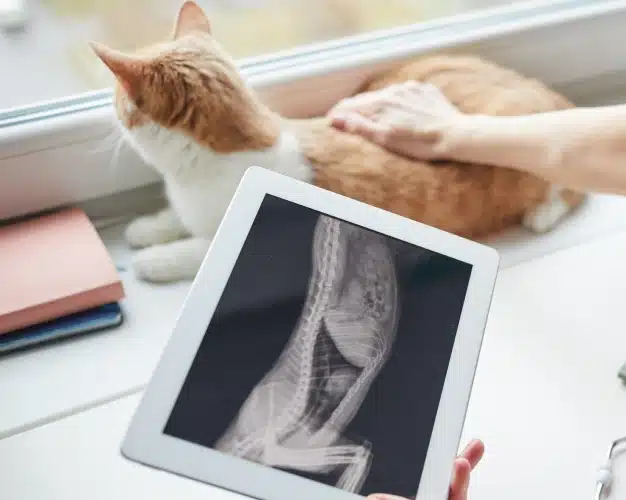
Our workup for cats frequently includes complete blood counts and chemistry panels to assess organ function, thyroid testing to screen for hyperthyroidism (a very common condition in middle-aged and senior cats), urinalysis to evaluate kidney function and screen for urinary crystals or infection, and digital radiographs to assess for bladder stones, respiratory issues, or abdominal concerns. For cats with chronic vomiting or weight loss, we may also recommend additional testing to rule out inflammatory bowel disease or other gastrointestinal conditions common in cats.
Why Baseline Testing Matters Even for Healthy-Seeming Cats
Because cats mask illness so well, we often recommend baseline diagnostic testing for middle-aged and senior cats even before any symptoms appear. Establishing what is normal for your individual cat makes it much easier for our doctors to spot meaningful changes on future testing, often catching conditions like early kidney disease well before your cat would show outward signs at home.
Schedule Diagnostic Testing for Your Cat
If your cat is showing any signs of illness, including changes in litter box habits, appetite, or energy, call Family Pet Clinic at (215) 357-6357
. Straining to urinate in a cat, especially a male cat, should be treated as an emergency.