

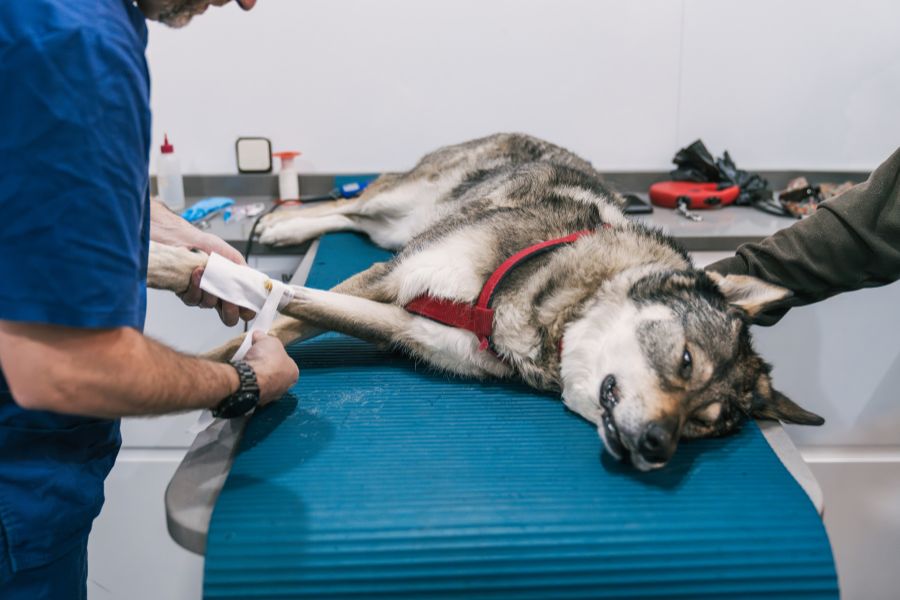
Cruciate Ligament Rupture is one of the most common reasons dogs develop sudden back leg pain or limping. This guide explains what pet parents usually notice, why the injury happens, how it is diagnosed, and what care options exist.
You will learn the early signs, home observations that matter, and when to seek professional help. By the end, you will feel prepared to act with confidence if your dog starts favoring a leg. This overview supports families in Feasterville, PA.
Understanding the Injury
Inside your dog’s knee sits a strong band of tissue that keeps the joint stable during walking, running, and jumping. When this tissue stretches or tears, the knee loses support. Dogs feel pain, swelling develops, and normal movement becomes difficult. Some tears happen in a single moment during play. Many start as slow weakening over time.
Certain dogs face a higher risk. Medium to large breeds see this injury more often. Extra body weight adds pressure to the joints. Poor muscle tone around the hips and thighs reduces support. Age plays a role, since tissues lose strength with time. Active lifestyles raise risk, especially when dogs twist while chasing toys.
Early Signs Pet Parents Often Notice
Most families first see a limp on one back leg. Your dog may hold the leg up while standing. Sitting can look awkward, with one leg stretched out. Rising from rest takes more effort. Stairs become challenging. Some dogs cry out at the moment of injury. Many stay quiet yet move less.
Behavior changes appear, too. Your dog may skip walks, avoid play, or sleep more. Appetite sometimes drops because discomfort affects mood. Licking around the knee points to soreness. Swelling near the joint becomes visible in some cases. These clues help guide your next steps.
At-Home Checks That Provide Clarity
You can gather helpful details before a visit. Watch your dog walk on a flat surface. Note which leg looks weak. Gently feel both knees for warmth or puffiness. Compare muscle size on each back leg, since long-term limping leads to muscle loss. Keep notes on when signs began, what makes them worse, and any recent rough play.
Do not force movement or test the joint yourself. Rest your dog, limit jumping, and use a leash for bathroom breaks. These steps prevent added strain while you arrange care.
Why Prompt Attention Matters
A sore knee changes how your dog moves. Extra load shifts to the opposite leg and the hips. Over time, this pattern leads to joint wear and new injuries. Early care reduces pain, protects nearby joints, and improves comfort for dogs facing a Cruciate Ligament Rupture. Waiting often means more swelling and slower recovery.
During an exam, the care team checks knee stability, range of motion, and pain response. Simple imaging may be recommended to look for joint changes. Together, these findings guide a personalized plan.
Treatment Paths and Daily Support
Care depends on tear severity, the size of your dog, activity level, and family goals. Some dogs benefit from rest, controlled exercise, weight management, and pain relief. Others recover best with surgery that restores joint stability. Physical therapy builds strength and balance after either approach.
At home, provide soft bedding, block access to furniture, and use rugs on slick floors. Short leash walks replace free running during healing. Consistent routines support progress. With patience and guidance, many dogs return to happy, active lives.
Conclusion
Living with a sore knee affects every part of your dog’s day. Watch for limping, posture changes, and reduced play. Take simple notes at home, protect the joint with rest, and seek guidance early. A clear plan restores comfort and mobility. With attentive care, many dogs regain strength and joy after a Cruciate Ligament Rupture.
We are conveniently serving in Feasterville, PA, and welcome you to our location: 1441 Bridgetown Pike, Feasterville, Trevose, PA 19053 — where compassionate care and community come together for your pet’s well-being. Schedule an appointment with Family Pet Clinic – Feasterville.
Frequently Asked Questions( FAQs):
1. How fast do symptoms appear after injury?
A: Some dogs show limping right away. Others develop signs across days or weeks as swelling grows. Gradual tears cause on-and-off discomfort that becomes constant. Any lasting back leg limp deserves evaluation, even if your dog still eats and wags.
2. Can my dog walk on a torn ligament?
A: Yes, many dogs keep walking despite pain. They compensate by shifting weight to other legs. This masks the problem while joint damage continues. Walking does not mean the injury healed. Ongoing limping signals a need for assessment.
3. Is rest enough for recovery?
A: Small dogs with mild tears sometimes improve with strict rest and guided exercise. Larger dogs or complete tears often need surgical support for lasting stability. A tailored plan offers the best chance for comfort and function based on your dog’s needs.
4. What happens if I wait too long?
A: Delays allow swelling and joint wear to progress. Muscle loss increases. The healthy back leg carries an extra load and faces a higher risk of injury. Early care shortens recovery time and lowers the chance of future problems.
5. How long does healing take?
A: Timelines vary by treatment choice and your dog’s size. Conservative care may take several months. Surgical recovery often spans twelve weeks with structured rehab. Most dogs keep improving beyond that window as strength and confidence return.